
Autosomal DNA (atDNA)
Autosomal DNA (atDNA) refers to the 22 pairs of non-sex chromosomes inherited from both parents. You receive approximately 50% of your autosomal DNA from your mother and 50% from your father. Because this DNA is randomly shuffled and recombined in each generation, every person inherits a unique mix of genetic segments. Autosomal DNA is widely used in genealogy to identify relatives, confirm family connections, and trace shared ancestry across multiple family lines.
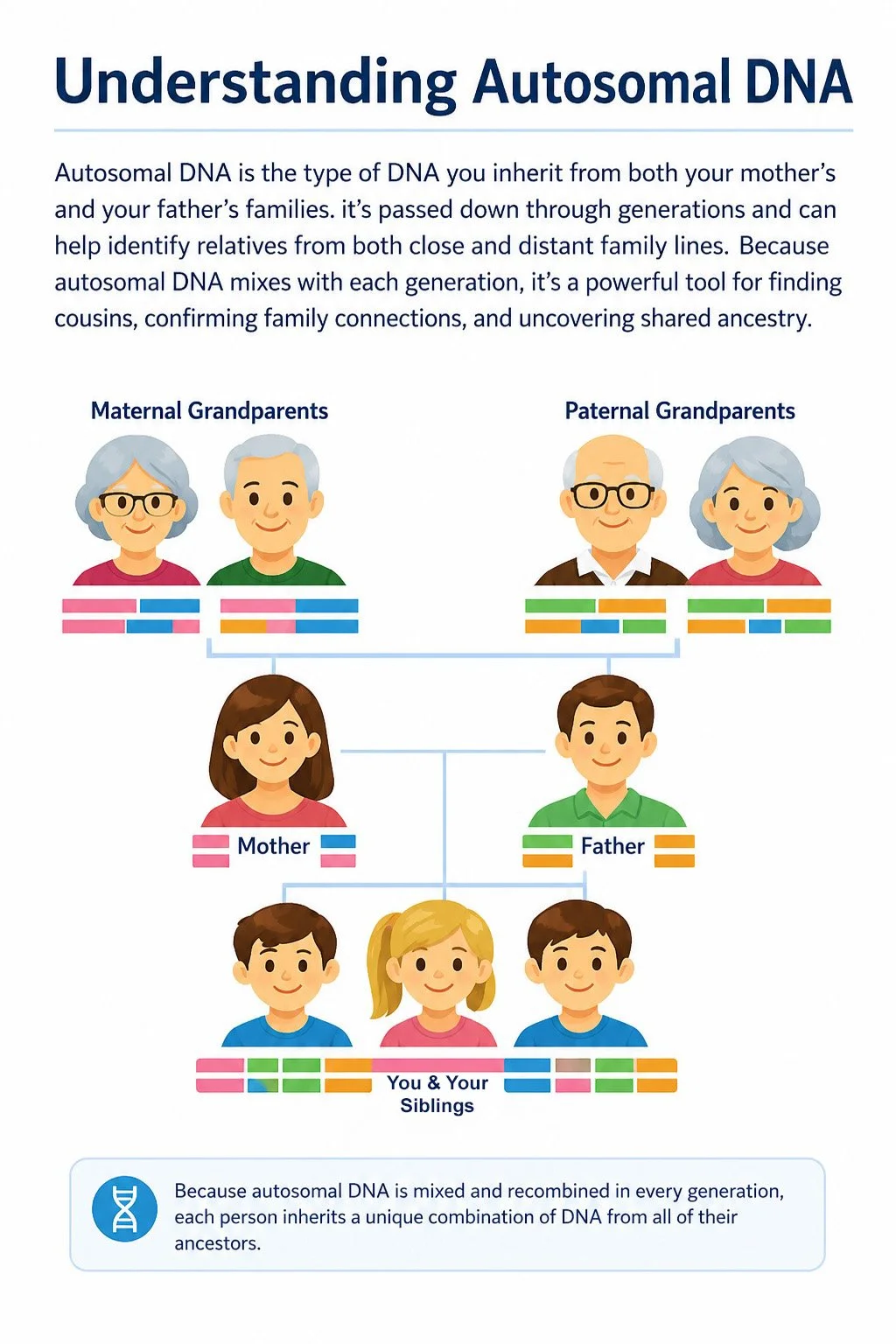
Understanding Autosomal DNA
Y-DNA
It All Begins Here
Y-DNA refers to the DNA carried on the Y chromosome, which is passed almost unchanged from father to son through the direct paternal line. Because only males inherit a Y chromosome, Y-DNA testing is primarily used to trace paternal ancestry, study surname origins, and identify connections between men who share a common male ancestor. Small mutations occur over time, helping genealogists estimate how closely different paternal lines may be related.
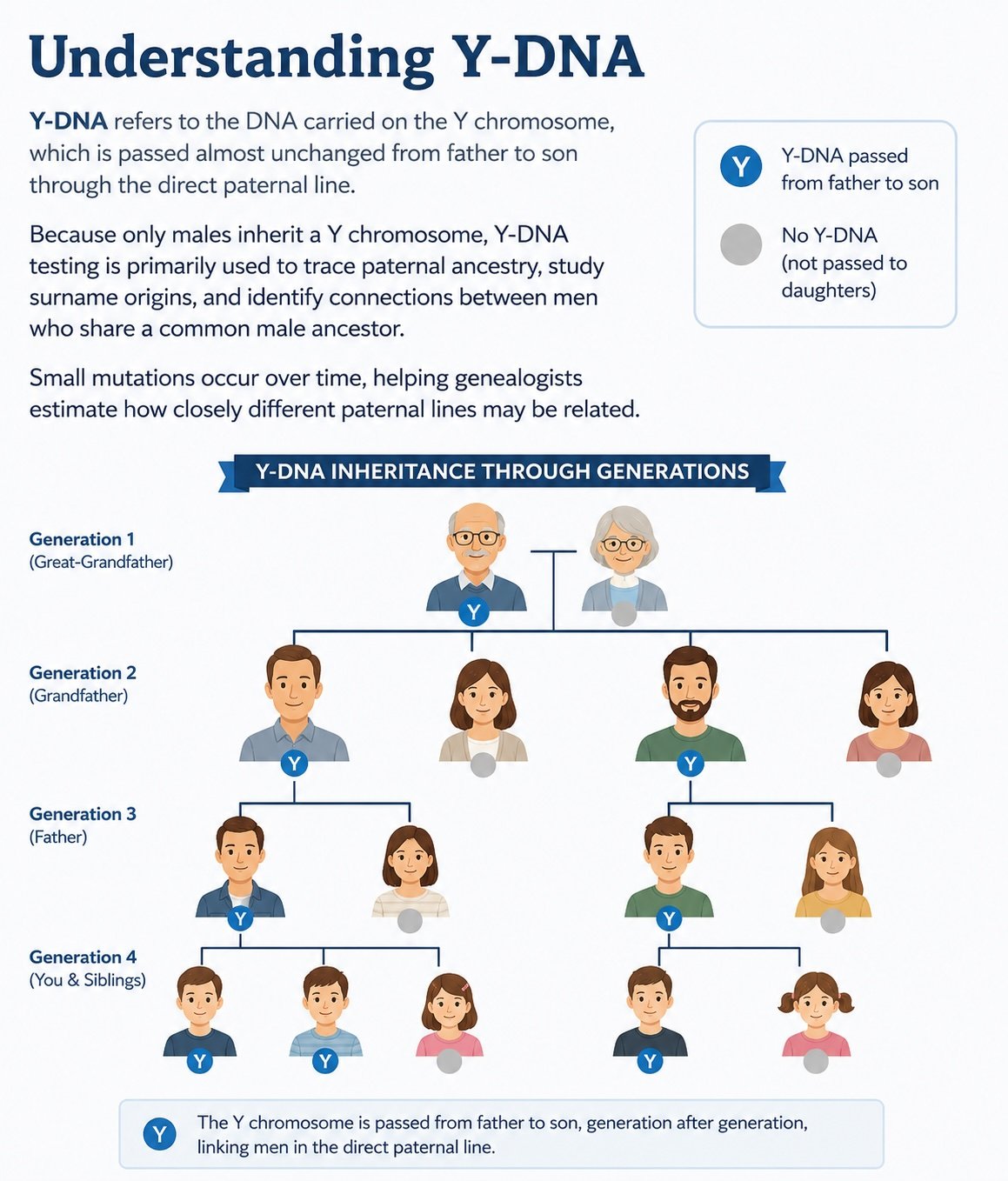
Understanding Y-DNA
Mitochondrial DNA (mtDNA)
It All Begins Here
Mitochondrial DNA (mtDNA) is the DNA found in the mitochondria, the energy-producing structures in our cells. It is inherited almost exclusively from your mother.
Both males and females inherit mtDNA from their mother, but only females pass it on to their children. Sons do not pass mtDNA to their children.
Because mtDNA changes very little over time, it is a powerful tool for tracing maternal ancestry, exploring ancient origins, and connecting with relatives who share a common maternal line.
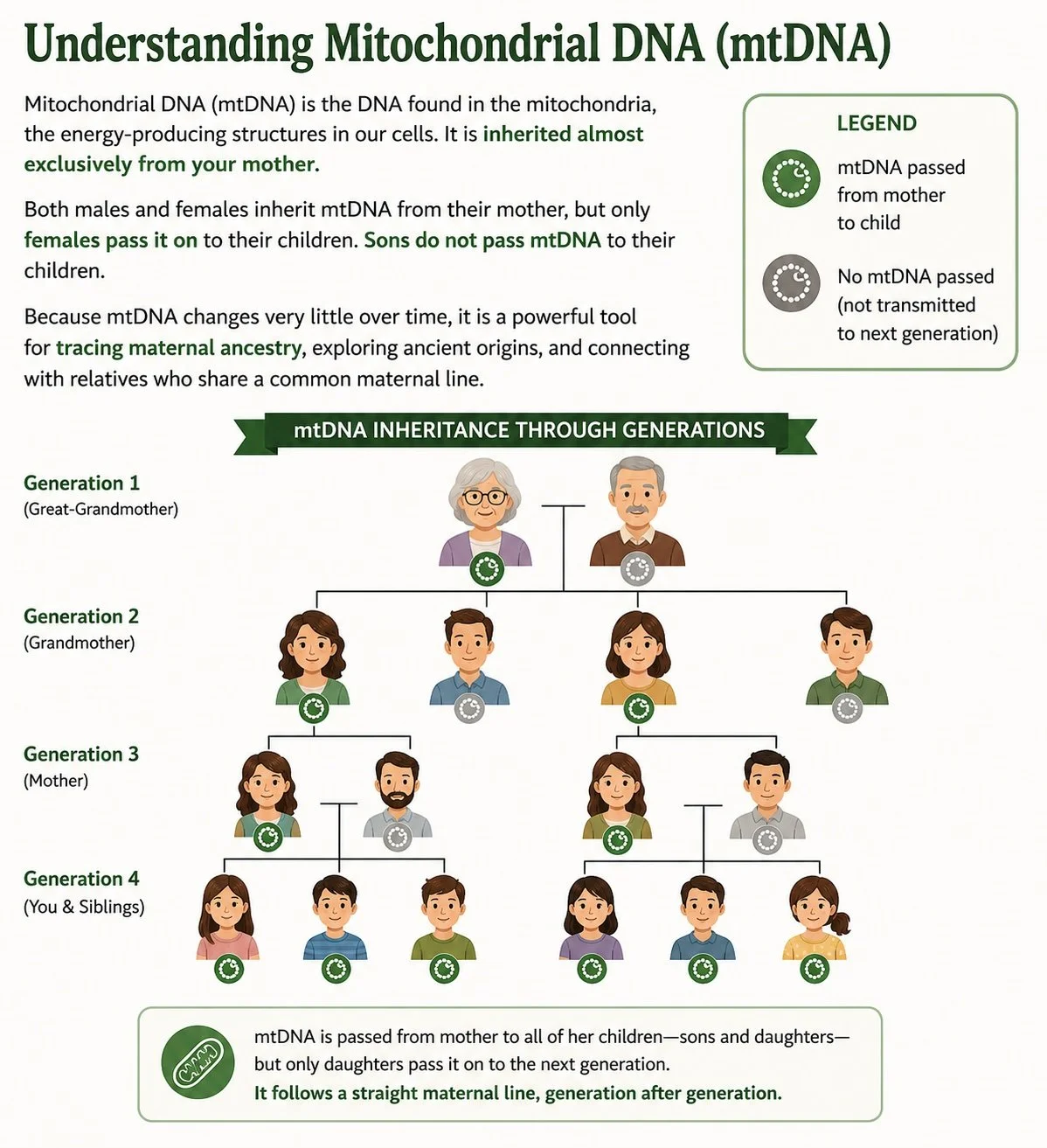
Understanding Mitochondrial DNA
X-DNA
It All Begins Here
X-DNA refers to the DNA carried on the X chromosome.
Females have two X chromosomes (XX) and inherit one
X from each parent. Males have one X chromosome (XY) and inherit their only X from their mother.
X-DNA is shared between mothers and children of both sexes, and between sisters. It is not passed from fathers to sons.
X-DNA testing can help uncover maternal relationships, connect with relatives on your mother's side, and provide clues about family history across generations.
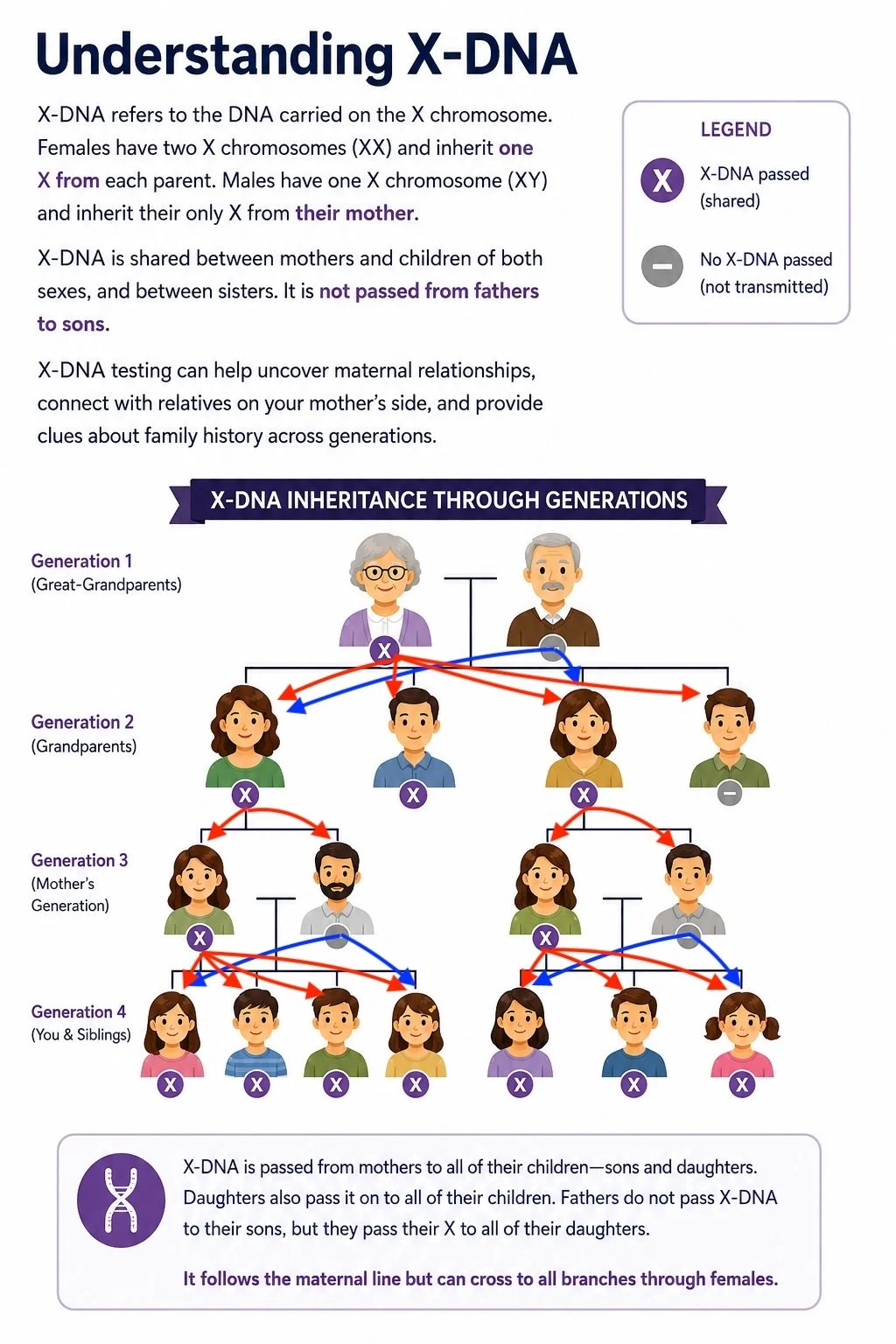
Understanding X-DNA